

The Hearty Blog
inflammation
Curcumin vs Turmeric - What’s the Difference?
Turmeric vs. Curcumin: What’s the Difference?
What is Turmeric?
Let's break it down further. Turmeric is a root vegetable from the ginger family and the star player in curried dishes and the popular drink, Golden Milk. This flowering plant is found in areas of India and Southeast Asia, and is often included in recipes to help create a bold yellow or orange color in the dish. To obtain the Golden Spice, the root of the turmeric plant is boiled, dried, and ground to a powder. This is the turmeric you find on the spice rack in the grocery store and in some herbal supplements. Various common names for turmeric can include Indian saffron, yellow ginger, yellow root, or kacha haldi. The turmeric plant is also known by the scientific name curcuma longa, which is most likely where curcumin got its name.
What is Curcumin?
When scientists took a closer look at turmeric, they found three bioactive compounds with health-promoting properties housed within the root of the plant. Known collectively as curcuminoids, these antioxidant compounds include:
Curcumin (or diferuloylmethane)
Demethoxycurcumin
Bisdemethoxycurcumin
Curcuminoids are natural polyphenols that occur naturally in plants and contain health-promoting properties. You receive some polyphenols from fruits and vegetables, but like curcuminoids, there are multiple types that can provide various benefits.
Curcuminoids are a unique group of polyphenols found only in the turmeric plant. But between the 3 curcuminoids in turmeric, one stands out above the rest. Curcumin, or diferuloylmethane, offer the biggest health benefits.
Taken as a supplement, turmeric helps support healthy inflammation response associated with physical overexertion† and helps support joint health*.
How Can I Add Curcumin to My Diet?
Although curcumin is the main compound needed to get the health benefits, that doesn't mean you need to find a curcumin supplement. Taking a turmeric supplement with enhanced absorption is a great way to get curcumin into your body. Though many Indian foods and healthy recipes contain turmeric, there is a huge difference between eating it as a whole food and taking it as a supplement. When eating turmeric as only a spice, your intake is less than 3% curcumin.
Another difference between foods naturally containing turmeric and a turmeric supplement is the bioavailability to your body. You may have heard health-conscious friends or seen news articles stating that to get the benefit of curcumin from turmeric in your diet you need to be sure you are eating your turmeric combined with an activator, like fat or black pepper for your body to properly absorb the nutrient. This advice comes because turmeric as a spice has poor bioavailability for your body to get curcumin’s benefits from eating the spice alone. When taking a turmeric curcumin supplement, look for one with enhanced absorption which provides a higher bioavailability than the natural spice.
To best use a turmeric curcumin supplement, follow dosage directions on the bottle and consult your primary care physician with any health questions or concerns.
Are All Turmeric Curcumin Supplements the Same?
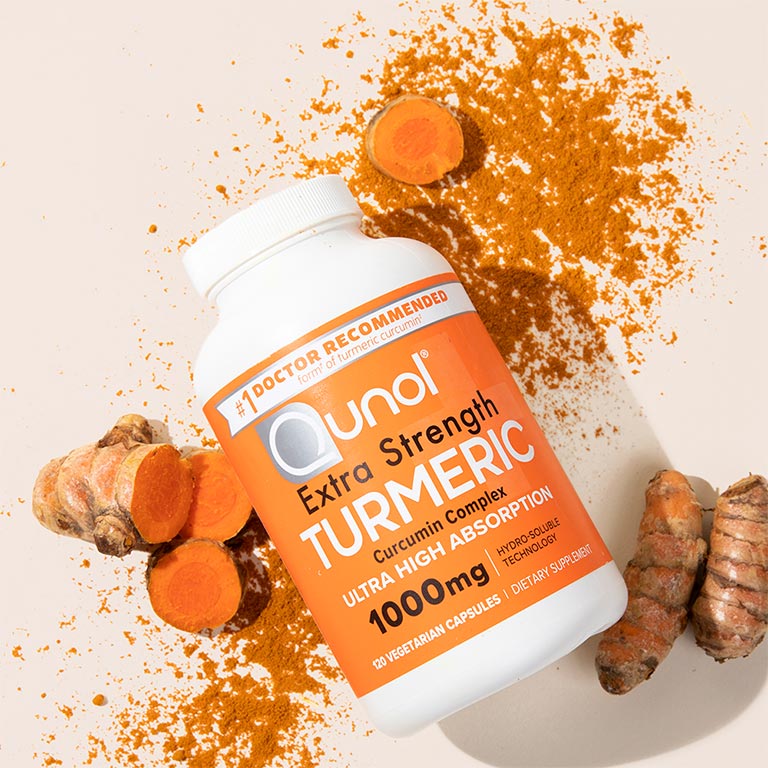
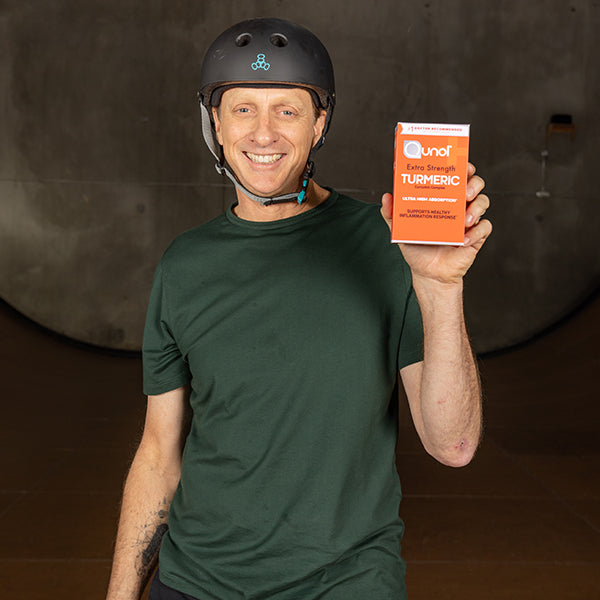
If you want to receive the full benefits of turmeric, look for a turmeric curcumin supplement like Qunol Extra Strength Curcumin Complex with water dispersion technology for enhanced bioavailability and superior absorption, even over other supplements.
†May help reduce temporary inflammation associated with physical overexertion.
This product is not intended to treat, prevent or cure inflammation associated with any disease.
*These statements have not been evaluated by the Food and Drug Administration. This product is not intended to diagnose, treat, cure, or prevent any disease.
CoQ10
CoQ10 - What is it and why is it important?
Coenzyme Q10 or CoQ10 is a vital vitamin-like nutrient that helps the body produce the energy that allows it to function. Our cells need CoQ10 for proper growth and maintenance. It is the vehicle that transports the electrons across the crucial energy production processes within our bodies. CoQ10 is regarded as an essential nutrient for cell regeneration and supports a long, healthy and productive life.
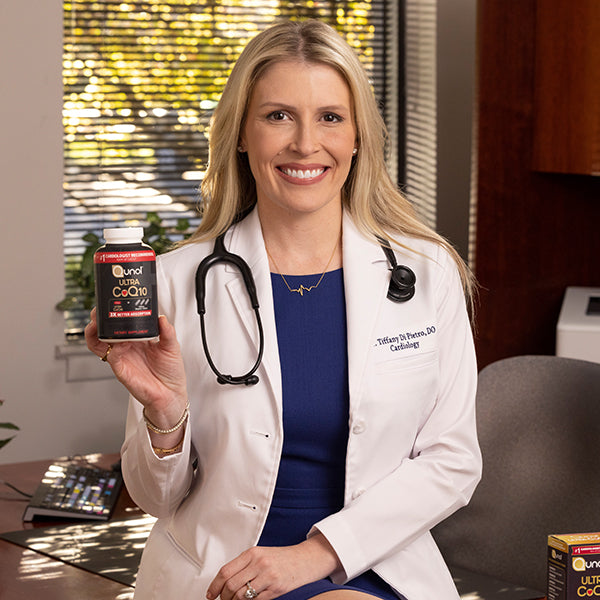
Researchers have spent years (since its discovery in the 1950’s) studying CoQ10, its essential functions in the body, how and why it declines and how best to replenish it. This research is one of the main reasons why cardiologists now recommend CoQ10 supplements to their patients more frequently than any other supplement, including Fish Oil.1
CoQ10 is Present Everywhere
CoQ10 is endogenous to the human body – meaning that we produce it naturally and we all have it. From our vital organs, to every muscle in our bodies, we find CoQ10 in practically every cell. In fact, the names ubiquinone and ubiquinol (the two most common forms of CoQ10 found in our bodies) both derive from the Latin “ubiquitas” (modern day English: ubiquitous), which literally means “present everywhere”.
CoQ10 is Responsible for Energy Production
CoQ10 is a naturally occurring nutrient-like coenzyme that plays an important role in the production of 95% of the energy used by our cells and organs. This energy is generated by a complex series of chemical reactions that culminates in the production of Adenosine Triphosphate or ATP, which is the way in which our bodies store energy.
CoQ10 is an Important Antioxidant
CoQ10 also acts as an antioxidant and helps protect our cells from damaging molecules known as free radicals that may lead to cell damage. Free radicals are reactive molecules that are formed by normal body functions (breathing, general physical activity and stress) and which can cause damage to healthy cells. They are also formed in response to external factors such as smoking and exposure to UV rays from the sun. They can attack the DNA of the cell, which may cause cellular damage.
CoQ10 is a fat-soluble antioxidant your body produces on its own, neutralizes free radicals and can help protect your cells from damage.
Find Our What Makes us The Gold Standard in CoQ10
SHOP NOW
References
1IQVIA ProVoice Survey
CoQ10
Statin Users, CoQ10 is Your New Best Friend
Following your doctor prescribed cholesterol lowering regimen that may include eating healthy, exercising regularly, and taking cholesterol medication such as statins can help keep your cholesterol in check.
However, it’s a bit of a double-edged sword. While statins help to keep your cholesterol levels under control, they can also deplete your body of essential compounds and chemicals that keep the body running smoothly.
More importantly, if you have high cholesterol and are currently taking statin medication, you run the risk of significantly lowering your normal CoQ10 levels, something that could compromise your normal body functions.
What is CoQ10?
The term may look like something off the molecular chart from your high school science class, but coenzyme Q10 is the only name we have to describe this essential antioxidant.
What does it actually do, though?
You could say that CoQ10 is a bright spark in the tinder box, as it gets everything fired up. From vital organs to muscles, you’ll find CoQ10 in every cell (did you know that the highest concentrations can be found in your heart, liver and kidneys?), balancing electrons, producing energy and fighting off free radicals. It’s the life of the party! In essence, it’s an energy-producing coenzyme that keeps your engine running on all cylinders.
The Power Plant of Every Living Cell
It’s hard to imagine our cells busy at work, rushing through our bloodstream to every organ and muscle in the body, repairing, building, and fighting off intruders. It’s a beehive of industry and this requires a lot of energy. This energy is produced by a complex series of biochemical reactions that results in the production of Adenosine triphosphate (ATP), which is the energy currency of the cell. CoQ10 is essential to this process due to its electron transfer characteristics and is in fact a vital factor for 95% of the overall energy production at the cellular level.
Thanks to CoQ10, this energy breathes life into your body and keeps it functioning optimally. However, when you’re taking statins, CoQ10 levels are significantly lowered.
What Happens When There’s a Shortage of CoQ10?
As you get older, CoQ10 levels naturally decline and researchers have identified CoQ10 deficiency as a contributing factor to many health conditions. CoQ10 is often recommended by general practitioners and cardiologists alike as a dietary supplement to help assure adequate levels of this coenzyme, especially if you’ve been prescribed statins. It has also proven to be an effective after-care supplement for heart failure, heart surgery, and chemotherapy.
CoQ10 is found in a bunch of foods like meat, fish, and whole grains. In a healthy, balanced diet, it should be in adequate supply.
Your organs require huge amounts of CoQ10 to carry out their daily functions. So you can understand how vital this antioxidant is to ensure their health.
Is CoQ10 Good for Muscle Pain Caused by Statins?
CoQ10 is in hot demand by the body, as its role is critical in maintaining the overall health of your body. Your organs rely on it, and so too do your muscles. In fact, they can't function without it.
During any given day, your muscle fibers break down and rebuild in order to get stronger. It’s a bit like housekeeping. Old muscle cells are swept away, with the arrival of fresh cells that are brimming with life.
Deep inside these muscle fibers, you’ll find CoQ10 delivering fresh energy stores to cells in need, as well as warding off intruders. But when levels of CoQ10 are compromised by statins, proper muscle function can be impaired, and the whole process begins to collapse. The result is muscle pain and joint stiffness – one of the common side effects of statins. Muscle soreness can seriously affect your mobility, not to mention, your quality of life. It also increases your risk of falling, as it leaves you unsteady on your feet.
According to a study published in the American Journal of Cardiology, CoQ10 can help alleviate muscle pain and joint discomfort brought on by statin drugs:
“Results suggest that coenzyme Q10 supplementation may decrease muscle pain associated with statin treatment. Thus, coenzyme Q10 supplementation may offer an alternative to stopping treatment with these vital drugs” – American Journal of Cardiology
Not only is CoQ10 essential in maintaining heart and organ health, it is also instrumental in the proper functioning of your muscles. And one of the secrets to longevity and quality of life is strong muscles.
CoQ10 And Statins – It Makes Sense to Supplement with CoQ10
This vital coenzyme is so essential to the body that you’ll notice immediately if you’re in short supply. Because statins can rob your body of this vital component, it makes sense to supplement your diet with CoQ10. There’s also the added health benefit of its anti-aging, antioxidant properties that help to prevent free radicals from damaging your tissues.
Talk to your doctor to see if CoQ10 is right for you, especially if you’re currently taking statins. It’ll make all the difference to your quality of life.
Shop for Qunol CoQ10 supplements or contact us with any questions about statins and CoQ10.
COQ10 SOURCES & REFERENCES
Coenzyme Q10 (CoQ10) : In Depth; National Center for Complementary and Integrative Health
https://nccih.nih.gov/health/supplements/coq10
CoQ10 and Statins: What You Need To Know : Healthline
http://www.healthline.com/health/coq10-and-statins#Overview1
CoEnzyme Q10, An Overview : Web MD
http://www.webmd.com/heart-disease/heart-failure/tc/coenzyme-q10-topic-overview
Effect of coenzyme q10 on myopathic symptoms in patients treated with statins:
American Journal of Cardiology
Ghirlanda G., Oradei A., Manto A., et al. Evidence of plasma CoQ10-lowering effect by HMG-CoA reductase inhibitors: a double-blind, placebo-controlled study. J Clin Pharmacol. 1993;33(3):226–229.
inflammation
How to Keep Joints Healthy As You Age
Joints are responsible for keeping your body moving freely, but over the course of a lifetime, they can take a beating. That’s why it’s so important to take care of your joints as you age.
How Do Joints Function?
The purpose of joints is to hinge two or more parts of your body to enable movement, like your thigh bone to your shin bone via the knee joint. They are designed to withstand friction and pressure, while protecting the ends of your bones as you move.
Cartilage lines the ends of your bones, and together with an added layer of sticky synovial fluid for lubrication creates a capsule between your bones for extra cushioning. Ligaments hold your joints together and keep it aligned with its axis of movement. Tendons provide extra support and attach to the muscle and bones. Working in unison, the joints, bones, and muscles allow your body to move freely; therefore, the health of one will affect the other. For example, weak muscles from inactivity will lead to weak joints.
Why is it Important to Support Joint Health as we Age?
Supporting joint health is all about taking care of your body. When you’re young your joints are supple and at their peak, but if you’re constantly pounding on them or exercising with poor form, you’ll most certainly feel the effects when you’re older.
In addition, as you age, cartilage and tendons can break down and lose their elasticity, and joints can become stiff and painful due to loss of padding and lubrication.
So exercise with care and follow these healthy habits to help support the health of your joints.
Tips to Help Support Joint Health
Regular Moderate Exercise
Exercise is one of the most vital elements of keeping your joints healthy. Activity helps to lubricate the joints and increase the circulation.
Low impact exercises like swimming, cycling, and walking are the best as they place the least amount of stress on the body. However, any exercise is better than none, so choose something you enjoy as you’re more likely to stick to it.
Daily Stretching Exercises
Joints tend to stiffen up overnight due to being inactive for so long. So plan to wake up to some gentle stretching exercises to start your day and work out the stiffness in your waking muscles and joints.
Stretching is also an important component of your exercise program before and after working out. Warming up will help lubricate your joints and a cool down stretch will help in recovery, reduce risk of injury, and increase your flexibility.
Weight Management
Extra weight means extra stress on your joints, and over time this can increase wear and tear. If you’ve already committed to getting more active, you’re one step closer to losing weight. Maintaining a healthy weight is key to a high quality of life and essential to promoting joint health.
Healthy Diet
We’re always looking for ways to eat more healthy and for joint health, a diet rich in antioxidants olive oil, berries and cherries, leafy greens, fatty fish, and nuts can be beneficial.
Just as it’s important to find an activity you enjoy, so too is it vital that you find healthy foods you love to eat. Eating healthy is not a fad, it’s a commitment to living a healthy lifestyle and fueling your body with the nutrients it needs to function at optimal health.
Smoking Cessation
We all know smoking is bad for your health, but did you know it can also negatively affect your bones and joints?
Quitting smoking is one of the best things you can do to help promote healthy joints.
Smoking is a serious addiction, but so too are the health risks. If you’re having trouble breaking the habit, please see your doctor for help.
Supplements to Support Joint Health*
Another element in your plan to promote the health and longevity of your joints is a supplement called turmeric.*
Turmeric can help support joint health; however, the problem lies with absorption.* Turmeric used in cooking may pass through the digestive system too quickly to truly benefit the body. So your best bet is a turmeric supplement with enhanced absorption.
How Qunol Turmeric can help Support Joint Health?
Qunol’s Extra Strength Turmeric Curcumin Complex is designed to deliver superior absorption. It has water dispersion technology which delivers superior absorption compared to regular turmeric§ supplements. It’s a valuable addition to your joint health regimen.*
*These statements have not been evaluated by the Food and Drug Administration. This product is not intended to diagnose, treat, cure, or prevent any disease.
Blood Pressure
Ubiquinol vs CoQ10 - What's the Difference?
CoQ10 Exists in Your Body Primarily in Two Forms:
If you’ve been researching CoQ10, you have likely noticed that there are two forms of CoQ10 supplements available: ubiquinone and ubiquinol.
Ubiquinone (the oxidized form of CoQ10)
Ubiquinol (the reduced form of CoQ10)
Your body utilizes both forms of CoQ10 and is constantly converting between ubiquinone and ubiquinol depending on its current need.
Studies show that when we are young, our bodies synthesize ubiquinone well, converting it readily to ubiquinol. But as we get older, the body's ability to convert ubiquinone to ubiquinol can diminish. Ubiquinol supplements contain a form of CoQ10 that has already been converted to its antioxidant form, ubiquinol – the form that fights excess free radicals and can help protect the body's cells from damage.
Oxidation is a normal process both in nature and in the human body. We see it at work in nature when a sliced apple turns brown or when iron rusts. In the human body, excess oxidation can damage healthy cells. Our bodies are designed for this process and are constantly producing new cells to replace the old. However, as we age and are exposed to certain environmental factors, the oxidation process can overwhelm the body’s ability to cope with it. Oxidation can lead to the formation of excess free radicals, unstable molecules that can cause cell damage. Ubiquinol is a powerful antioxidant that helps fight against free radicals.
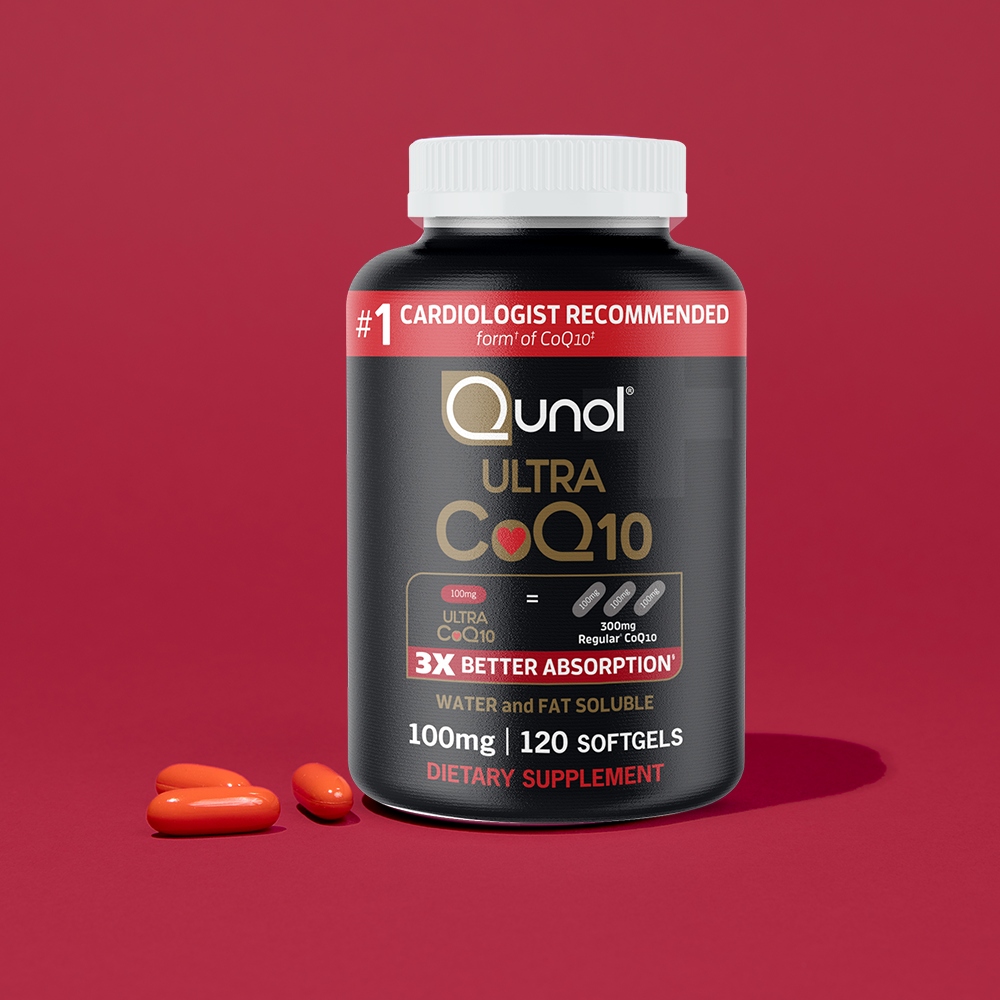
It's important to note that our Qunol Ultra and Mega are both water and fat-soluble and are better absorbed than a regular¹ form of CoQ10.
These statements have not been evaluated by the Food and Drug Administration. This product is not intended to diagnose, treat, cure, or prevent any disease.
1 Regular CoQ10 refers to unsolubilized ubiquinone in oil suspensions in soft gels and/or powder filled capsules/tablets
Blood Pressure
What Makes Your CoQ10 Levels Decline?
CoQ10 Levels Decline Naturally With Age
CoQ10 is endogenous to the human body – meaning that you produce it naturally and we all have it. However, our body’s natural ability to produce CoQ10 decreases as we age.
Unfortunately, the amount of CoQ10 we typically get from our regular dietary intake may not be enough to compensate for even our normal age-related decline in CoQ10 levels.
Cholesterol Lowering Medications – Statins – May Reduce Your CoQ10 Levels
Statins, or by their proper name “HMG-CoA reductase inhibitors”, are the type of cholesterol management medications most often prescribed in the United States.
Your body produces cholesterol in a pathway in your liver. It is within this same pathway that your body produces other essential compounds and chemicals including CoQ10. Because statins work by blocking the production of cholesterol in this pathway, they may also block the production of CoQ10.
This could potentially complicate other health issues and leave you vulnerable to side effects from your prescribed statins. Talk to your healthcare professional to learn more.
*These statements have not been evaluated by the Food and Drug Administration. This product is not intended to diagnose, treat, cure, or prevent any disease.
Blood Pressure
Benefits of CoQ10
Supports heart and vascular health
Promotes healthy blood pressure levels1
Essential for energy production
Beneficial to statin drug users2
Powerful antioxidant
CoQ0 is a naturally occurring nutrient-like coenzyme. The primary function of CoQ10 is to help with cellular energy production. It is the powerhouse of every cell in our bodies and exists at the most basic level of each cell’s operation- the mitochondria. It is in fact present in the cells of all living organisms, from bacteria to plants, all animals, and humans. CoQ10 is also an antioxidant and helps protect our cells from damaging molecules known as free radicals that may lead to cell damage.
The main benefit of taking a CoQ10 supplement is to assist you in restoring your CoQ10 levels that might have been depleted due to our natural aging process or due to a variety of external factors such as stress, and the use of cholesterol lowering statin drugs.*
Helps Support a Healthy Heart
No other organ in our body requires more energy and works harder than our heart. During an average lifetime, your heart will beat more than 2.5 billion times (that is more than 100,000 times a day!). It takes a lot of energy for your heart to operate at peak level. Since CoQ10 is so vital to the production of energy at the cellular level, it should come as no surprise that your heart has the highest concentration of CoQ10 found anywhere in the body. CoQ10 can help support heart and vascular health, and helps maintain healthy blood pressure already within a normal range.*
References
*These statements have not been evaluated by the Food and Drug Administration. This product is not intended to diagnose, treat, cure, or prevent any disease.
1Helps maintain healthy blood pressure already within a normal range.
2 Cholesterol-lowering statin drugs can deplete the body's natural levels of CoQ10. Qunol can help replenish lost CoQ10 due to statin drug therapy.
CoQ10
How Can You Boost Your CoQ10 Levels?
We Get Minimal Amounts of CoQ10 From Our Diets
Animal-based products and, in particular, organ meats such as heart and liver are relatively good sources of CoQ10. Lower amounts of CoQ10 are also found in beef, pork, chicken, and fatty fish such as tuna. In reality, though, it is not likely that a person could consume large quantities of any organ meat needed to have a reasonable amount of CoQ10 from their diet.
The Best Way to Boost Your CoQ10 Levels Is Supplements
Since the typical diet does not provide enough CoQ10 to reach recommended levels, taking a CoQ10 supplement is a good way to help increase CoQ10 levels.
Talk to your doctor to discuss a dose that might be appropriate based on your health status and medications you are taking.
Children under 18 should not be given CoQ10 (or any other supplement) unless under the supervision of a health care provider.
*These statements have not been evaluated by the Food and Drug Administration. This product is not intended to diagnose, treat, cure, or prevent any disease.